Memoir
History, seances and ghost houses.

Something a little different. This is an abridged version of an essay I wrote in my memoir class.
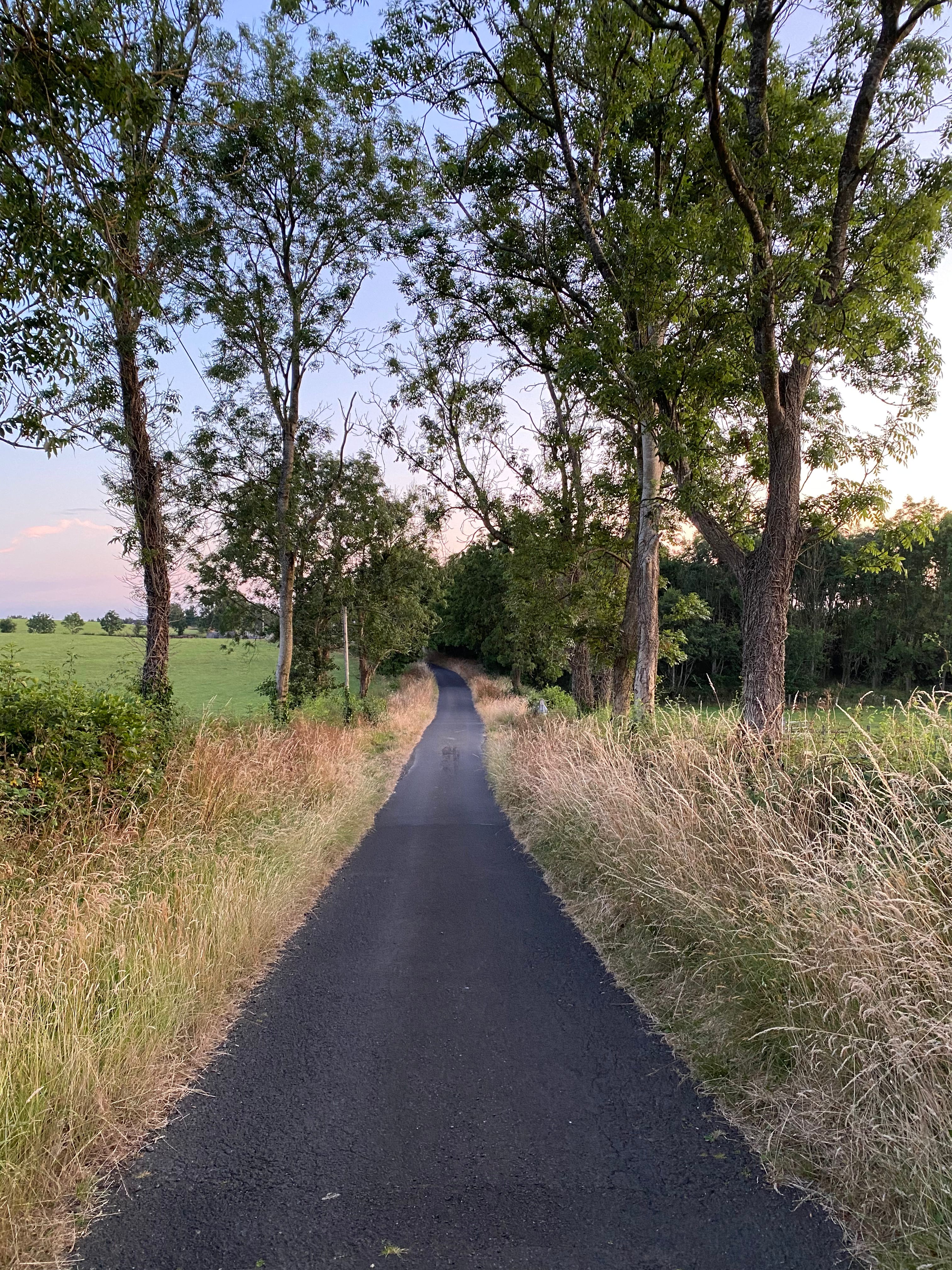
Small children have no conception of time. Everything happens in the present; for old people time is fluid and as you age both the past and the future seem to get closer and closer. I am a post-war baby but when my mother talked about the war I was surprised that she could remember it. To me the war seemed as long ago as dinosaurs. Now that I am old myself I can’t believe how connected I feel to historical events. My mother’s cousin was lost in the Belfast Blitz, a great-uncle fought and died in Gallipoli, my great-grandfather sailed on the Titanic, and my great-great grandmother survived the famine. All of these people seem real to me even though they were all dead before I was born.
We moved to the old house in the 1960s. My father, in his mid forties, took out a loan and was finally able to buy a small farm. The farmhouse was a traditional house built with stone. It was a two-storey house with sash windows and a slate roof; only houses that were falling down were thatched. No improvements had been made to the house so when we first moved in there was neither a bathroom, electricity nor mains water. There was a well in the yard, a concrete circle with a lid in the middle. We were forbidden from going anywhere near it. Unlike children today we were allowed to run wild but some things were out of bounds. We were constantly warned about the dire consequences of not doing what we were told. There was no end to the things that might lead to a tragic death, falling into a well, standing too close to an open fire, eating poisonous berries or walking backwards down the road which was something the wee ones liked doing.
My mother was proud that she now lived in a house owned by my father. He had bought the farm from a man called McCoy who she believed was the person who had originally built the house. A neighbour told my mother that the old man was adamant that no Catholic would ever live there. We knew he had died in the house in one of the small bedrooms and none of us wanted to sleep in that room but we never knew which bedroom it was. My mother said it was the room she and Daddy slept in but we weren’t convinced she was telling the truth. My youngest sister, when she was five or six, watched a man come out of one of the bedrooms. He stood silently at the top of the stairs before disappearing. To this day she believes that she saw the ghost of Mr McCoy.
My mother when she was small lived briefly in Belfast, just long enough to be scarred forever by the harshness of the nuns who taught in her school. She was left-handed but was forced when writing to use her right hand. The nuns didn’t mind which hand she drew with so she carried on using her left hand and it became her party piece, her ability to write with one hand and draw with the other.
In the 1930s her family moved to the country, close to Randalstown. At that time it was common for farmers to own more than one house. When they bought little pockets of land there was usually a house that went with it, and sometimes these cottages lay empty for years, their windows broken and the thatch on the roofs slowly rotting. My grandparents rented from farmers, moving from one cottage to another until the early 1960s when they finally got a Council house.
My mother’s pride in being married to a home-owner soon waned when she realised that my father was intent on paying off his loan as quickly as possible, so she rarely had enough housekeeping money.
The house had two small buildings next to it, a byre and a hen house. Opposite the house was a row of whitewashed sheds and each had their own name, the meal shed, the tool shed, the big shed and the middle shed. Some of the sheds had lofts which we sometimes played in. All of these sheds had once been dwelling houses.
One summer we turned one of the lofts into a den. Mary, the oldest sister, decided it would be an ideal place to hold a seance. She was good at crafts and quickly made an ouija board using a button and scraps of paper. Some of our cousins were visiting and we gathered in secret to hold the seance. We were all jittery with nerves, some of us more frightened than excited.
Playing with matches was strictly forbidden but Mary ignored this and lit a candle before beginning to chant,
“Is there anybody there?”.
We each had a finger on the button and it began to slowly make its way towards the ‘yes’ card. I was terrified especially when the spirit identified itself as Mr McCoy. When asked whose room he died in, the button slid towards the letter A and then N. I knew where it was going and it all ended in tears. Once again Mary was in trouble for being a bad influence on the younger members of the family, and worse still trying to conjure up the dead. This was not something a young Catholic girl should be doing and there was talk of her being taken to see the Parish Priest.
When you are young you have no sense of history. It never occurred to us that we weren’t the first children to play in those lofts and that dozens of people had been born and died in what were now the outhouses.
On the most recent Ordnance Survey map the land next to the old house is named Murphystown which was also the name of the road when we first lived there. The fact that it has a name suggests that at some point the house was part of a larger settlement. I spent some time researching earlier maps.
The terrace of cottages opposite the old house was there in the early 1800s and on the other side of the road was a longer terrace. I’m guessing they would have been built for mill workers although there is no trace of a mill nearby. It is difficult to establish just how many houses there were in the terraces but it was probably at least fifteen. None of the householders would have owned their homes as the whole townland of Drumkeeran was part of Lord O’Neill’s estate and, according to the Ordnance Survey reports in 1842, Lord O’Neill was a particularly bad landlord who neglected both his land and his tenants. By 1900 the terrace on the other side of the road had disappeared.
A two-storey house first appeared in a later map in the 1840s so it wasn’t true that Mr McCoy had built the house but it is likely that only Protestants had lived in it. In the 1911 census its inhabitants were Presbyterians and they were the people who sold the house to Mr McCoy.
In the early 1800s there would probably have been at least 150 people living on our road and most of them would have lived in Murphystown; today there are only eight occupied houses on the road and most of these house were built in the last fifty years.
The local school was Tannangmore which opened around 1840. At that time it was non-denominational. Attending school was not obligatory and the proportion of children who attended was particularly low in this area. In 1845 Tannanghmore School had 102 pupils. One hundred and twenty years later when I attended the same school, now in a slightly different location, there were only 30 pupils on the roll and a few years ago the school was permanently closed. There is a current plan to turn the playing field into a graveyard.
Ireland is the only country in Europe where the population today is lower than it was in 1841.
Between 1845 and 1850 a potato blight struck Europe. Across the different northern countries many people died but by far the worst affected country was Ireland. More than a million people died from starvation or infectious diseases and between 1.5 and 2 million others emigrated. In less than a decade one-fifth of the population disappeared.
I don’t know what happened to the inhabitants of Murphystown but I imagine that many of them must have died in the famine.
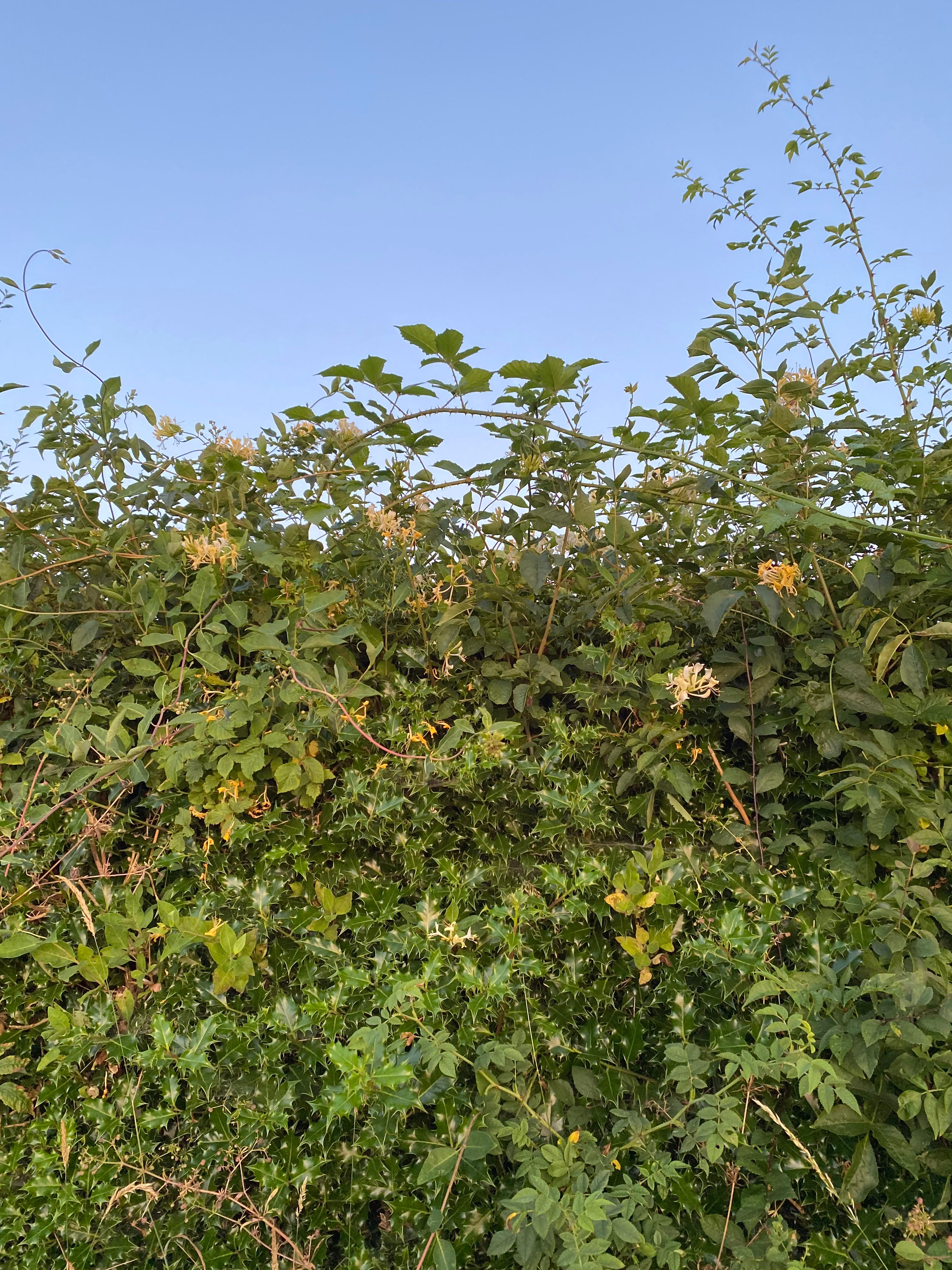
My mother told us that if in spring daffodils appeared at the edge of a road, or in summer cultivated roses bloomed in the corners of fields, it was a sign that there had once been houses there. When we were kids we scared ourselves with stories of non-existent ghosts, but what we didn't know was that we were surrounded by the ghosts of houses.
If you found this interesting please leave a like and/or subscribe. Thank you.
I really enjoyed reading that.
So evocatively written and vivid. I also remember the general atmosphere of danger lurking, that adults would warn you about, and those terrifying public service short films would lay out like medieval visions of hell - the worst for me was one of a child falling into a big grain silo in a farm shed…